Brain

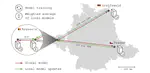
Real-world federated learning for brain imaging scientists.
BACKGROUND: Federated learning (FL) has the potential to boost deep learning in neuroimaging but is rarely deployed in real-world …
Real-world federated learning for brain imaging scientists.
Impact of brain volume on coronavirus disease of 2019 severity and subsequent cognitive decline in patients with multiple sclerosis.
BACKGROUND: Clinical disability is among the risk factors of a more severe coronavirus disease of 2019 (COVID-19) course in patients …
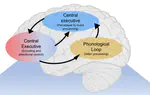
Disrupted working memory event-related network dynamics in multiple sclerosis.
In multiple sclerosis (MS), working memory (WM) impairment can occur soon after disease onset and significantly affects the …
Longitudinal changes in global structural brain connectivity and cognitive performance in former hospitalized COVID-19 survivors: an exploratory study.
BACKGROUND: Long-term sequelae of COVID-19 can result in reduced functionality of the central nervous system and substandard quality of …
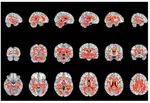
Radial diffusivity reflects general decline rather than specific cognitive deterioration in multiple sclerosis.
Advanced structural brain imaging techniques, such as diffusion tensor imaging (DTI), have been used to study the relationship between …
Radial diffusivity reflects general decline rather than specific cognitive deterioration in multiple sclerosis.
Brain age as a surrogate marker for cognitive performance in multiple sclerosis.
BACKGROUND AND PURPOSE: Data from neuro-imaging techniques allow us to estimate a brain’s age. Brain age is easily interpretable …
Signal quality as Achilles' heel of graph theory in functional magnetic resonance imaging in multiple sclerosis.
Graph-theoretical analysis is a novel tool to understand the organisation of the brain.We assessed whether altered graph theoretical …